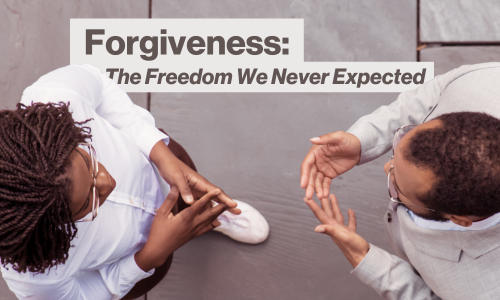
“Be kind to each other, tenderhearted, forgiving one another, just as God through Christ has forgiven you.” – Ephesians 4:32 NLT
Corrie ten Boom knew suffering—real, soul-scarring suffering. She survived the terror of Ravensbrück concentration camp. Years later, she found herself standing on a stage in Germany, speaking about the power of God's forgiveness. Her message was clear, bold, and painfully true.
But then the real test walked toward her.
She recognized him immediately, one of the guards from the very camp where her family suffered and her sister died. He didn’t recognize her specifically; he only knew that she had mentioned Ravensbrück in her talk. To him, she was just a speaker. But to her, he was a sharp, cold, and painful memory.
He reached out his hand and said the words she never expected to hear: “Will you forgive me?”
In that moment, Corrie felt a war inside her. Every wound, every loss, every injustice rose up in protest. Forgive him?
She couldn’t do it, not on her own.
So she prayed, asking for strength to obey the God she trusted. And slowly, she lifted her hand to his.
Corrie later said that what happened next wasn’t her doing. It was grace—pure, undeserved, miraculous grace. The kind only God can give.
And in that handshake, something amazing happened: the impossible became possible.
Forgiveness didn’t erase the story, but it rewrote the ending.
Why Forgiveness Is Hard
Our emotions get in the way.
King David understood this more than most. In Psalm 55:12-14, he grieves the betrayal of someone he once called a friend. Earlier in the psalm, 55:4-8, he describes fear and anxiety in words that sound reflective of a panic attack. David’s heart was hurting—deeply. And so are ours sometimes.
We often misunderstand forgiveness.
We think it should be quick. We think it means restoring a broken relationship. But Scripture paints a gentler, wiser picture.
What Forgiveness Is Not
Forgiveness is not instant.
Forgiveness takes time, even a lifetime. There is not a switch we can flip that will instantly eliminate emotional pain. God knows that. Psalm 103:14 reminds us He understands our weaknesses—our humanness. Forgiveness is often a slow walk.
Look at Joseph. God separated him from his brothers for years, not only because He loved Joseph, but He knew Joseph needed time. Time to heal. Time to breathe. Time to forgive.
Forgiveness is not the same as reconciliation.
Forgiveness may open the door to reconciliation, but it doesn’t demand we walk through it.
David forgave Saul, but their relationship never returned to what it was. In Acts 15, Paul and Barnabas parted ways after a heated disagreement. Whether their friendship was ever restored, Scripture doesn’t say. But the lack of reconciliation didn’t mean lack of forgiveness.
Sometimes we forgive…and still choose healthy distance. That is not failure. That is wisdom.
What Forgiveness Is
1. Forgiveness is commanded.
Jesus doesn’t leave it optional. Scriptures like Matthew 6:14-16, Mark 11:25, Ephesians 4:31-32, and Colossians 3:13 instruct every follower of Christ to forgive. Not because it’s easy—because it’s essential to spiritual health.
2. Forgiveness is God’s protection.
Forgiveness serves as a protective shield against bitterness. Bitterness doesn’t poison the offender—it poisons us. It seeps into every part of life and steals joy from every corner of the heart.
Forgiveness is God’s antidote. It frees us to love again. To breathe again.
3. Forgiveness is an invitation for God to act.
Romans 12:19 tells us not to take revenge, but to leave justice to God. When we release anger, we release the pressure that’s been crushing our minds, bodies, and souls. Forgiveness doesn’t say, “What happened was okay.” It says, “God, You take it from here.”
The Three Words That Changed the World
Centuries before Corrie ten Boom spoke her words, our Savior spoke three of His own:
“Father, forgive them.”
Bleeding. Suffering. Dying.
And forgiving.
Those words set us free. They show us what forgiveness can do:
It changes a life.
It changes a heart.
It changes your future.
An old anonymous poem says it simply:
“Free yourself from the past,
You will then, indeed, be free at last.”
Forgiveness is not just a gift we give to others; it is the key that unlocks our own freedom. Embrace the transformative power of forgiveness and watch as it reshapes your life. May God give you the courage to forgive, the grace to heal, and the freedom only Christ can give.
Reflection & Action:
1. Create a Forgiveness List
Identify individuals or situations that you need to forgive. Write them down and pray for the strength to let go.
2. Extend Forgiveness to Yourself
Recognize that self-forgiveness is just as crucial. Reflect on the choices you’ve made and offer yourself the grace God extends to you.